Contents:
- Understanding Your Curling Iron and Hair Type
- Preparation: The Step Nobody Skips
- The Core Technique: Wrapping and Holding
- Sectioning and Direction Matters
- Finishing and Setting Your Curls
- Common Mistakes and How to Fix Them
- Seasonal Considerations and Timeline
- Budget Breakdown: What You’ll Actually Spend
- Frequently Asked Questions
- How long do curls last with a curling iron?
- Can you curl very short hair with a curling iron?
- Does curling iron use damage hair permanently?
- What temperature should beginners use?
- Should you curl dry or damp hair?
- Moving Forward With Your Curling Practice
You’ve probably stood in front of the mirror holding a curling iron and wondered whether you’d ever achieve those effortless-looking waves that seem to define modern hairstyling. The frustration is genuine—a tool designed to create curls shouldn’t feel so unpredictable. Yet millions of people struggle with the technique, leaving their hair looking kinked, damaged, or somehow worse than before they started. The good news is that curling hair with a curling iron is absolutely learnable, and with the right approach, you’ll quickly develop the muscle memory needed to produce consistent, beautiful results.
Curling irons have been a staple of hair care for over a century, evolving from simple metal tubes heated over flames to today’s sophisticated technology with precise temperature controls and advanced ceramic or tourmaline barrels. The basic principle remains unchanged: you wrap sections of hair around a heated barrel, hold for the right duration, and gently unwind. What has changed is our understanding of how to do this without destroying hair health, and how different techniques produce distinctly different results.
Understanding Your Curling Iron and Hair Type
Not all curling irons are created equal, and matching yours to your hair type is the foundation of success. The barrel size determines curl size—a 25mm barrel creates tight ringlets, whilst a 38mm barrel produces loose waves. Most people find a 32mm barrel offers versatile everyday curling. The material matters too: ceramic barrels heat evenly and reduce frizz, whilst tourmaline-coated barrels emit negative ions that seal the hair cuticle, adding shine.
Your hair type influences how long curls will hold. Fine hair typically curls easily but loses curl definition quickly, often lasting only 3-4 hours without setting spray. Thick, coarse hair requires higher temperatures (around 190-210°C) and holds curls for 6-8 hours. Wavy hair sits somewhere in between. If you have damaged or previously bleached hair, you’ll need to work at lower temperatures—150-170°C—and use heat protectant products religiously.
In early 2026, quality curling irons range from £25 for basic models up to £150+ for professional-grade tools with ionic technology. For most home users, investing £40-70 in a reputable mid-range model pays dividends through even heat distribution and durability. Brands like ghd, Dyson, and Babyliss produce reliable options across different price points.
Preparation: The Step Nobody Skips
The secret to curls that actually last begins long before you touch the iron to your hair. Freshly washed hair curls poorly because it’s too soft and slippery. Aim to curl hair 1-2 days after washing, when natural oils have restored some grip. If you must curl freshly washed hair, use a volumising mousse on damp hair and blow-dry completely before curling.
Heat protectant products aren’t optional—they’re essential insurance. These products coat each strand with a protective barrier that reduces heat damage and moisture loss. Spray protectants work best for thin hair; creamy formulas suit thicker textures. Apply to damp hair before blow-drying, or to dry hair 5 minutes before using the iron. Expect to spend £5-8 on a quality heat protectant that lasts several months.
Blow-dry your hair completely straight or with minimal texture. Damp strands won’t hold curls properly because the heat won’t seal the cuticle effectively. If your hair is naturally curly or textured, you may need to blow-dry against your natural wave pattern to create a smooth base. This matters far more than people realise—rough, uneven hair catches on the barrel unevenly, creating kinked sections instead of smooth curves.
The Core Technique: Wrapping and Holding
The motion of wrapping hair around the barrel determines your success more than any other factor. Begin with a small section—roughly the thickness of your thumb and slightly narrower than your barrel. Too much hair creates weak, ill-defined curls; too little wastes time.
Hold the iron horizontally at the level where you want the curl to begin. For maximum volume, start at the roots. For tighter, more defined curls, begin mid-length. Clamp the hair in the barrel’s grip, then, using your other hand, wrap the section smoothly around the barrel, moving away from your face. The wrapping motion should take 2-3 seconds, creating a neat spiral with no overlaps or loose bits.
Temperature timing depends on hair type and thickness. Fine hair: 8-10 seconds at 160-180°C. Medium hair: 12-15 seconds at 180-200°C. Thick or coarse hair: 15-20 seconds at 200-210°C. Don’t hold longer hoping for tighter curls—you’ll damage the hair and, counterintuitively, the curl will actually drop faster because the protein structure breaks down. A timer on your phone removes guesswork.
Release the curl gently by unclipping the barrel and letting the hair fall away. For tighter, longer-lasting curls, catch the hot curl in your palm for 5-10 seconds before releasing—this allows it to cool and set the shape. This cooling step is genuinely important; hot hair is still malleable, so keeping it in the curl shape whilst it cools locks in the bend.
Sectioning and Direction Matters
How you divide your hair into sections determines whether your finished look looks intentional or chaotic. Work in horizontal layers from bottom to top. Clip up all hair above your working section with clips—this prevents you from re-curling already-curled hair and keeps your work tidy.
At the back of your head, divide hair into vertical sections, curling each one away from the centre part. At the sides and front, you have more flexibility. For face-framing softness, curl the front-most sections forward, towards your face. This creates a polished, intentional appearance. Curling everything away from the face (sometimes called ‘rotating’ all sections the same direction) looks more editorial and modern.
Consider this example: Sarah, a marketing professional, spent two years curling every section the same direction because she thought consistency equalled polish. The result was uniform but somewhat pageant-like—the curls felt rigid, not natural. When she started alternating directions on alternating sections, her curls looked softer and more dimensional, even though technically they were tighter.
Finishing and Setting Your Curls
Freshly curled hair is fragile. Avoid touching it for at least 15 minutes—your fingers will disrupt the curl shape. Let the curls cool completely in their formed position. Some stylists suggest pinning each curl against the scalp with a clip whilst cooling, which does genuinely improve longevity by another 2-3 hours.
Once fully cooled, use a light hairspray to set the shape. A flexible-hold formula (usually labelled ‘flexible’ or ‘light hold’) maintains the curl without stiffness. Heavy-hold sprays can actually make curls look artificial and stiff. Spray from 15-20cm away, using quick bursts rather than drenching. You’re aiming for a light mist, not saturation.
For curls that need to survive heat, humidity, or a full working day, apply setting spray or mousse to your hair before curling, not after. Product applied before curling works with the heat to set the shape more permanently. Applied after, it simply coats the surface.
Common Mistakes and How to Fix Them
Kinked curls appear when you wrap uneven sections, when the barrel temperature is too high for your hair, or when you move the iron whilst the hair is wrapped around it. Solution: start with slightly lower temperatures, ensure your sections are neat and even, and hold the iron still whilst the hair crisps.
Loose, droopy curls that fall flat within an hour suggest either too-low temperature, hair that’s been over-conditioned, or insufficient cooling time. Raise your temperature by 10-20°C, reduce conditioner on mid-lengths and ends, and always let curls cool before touching them.
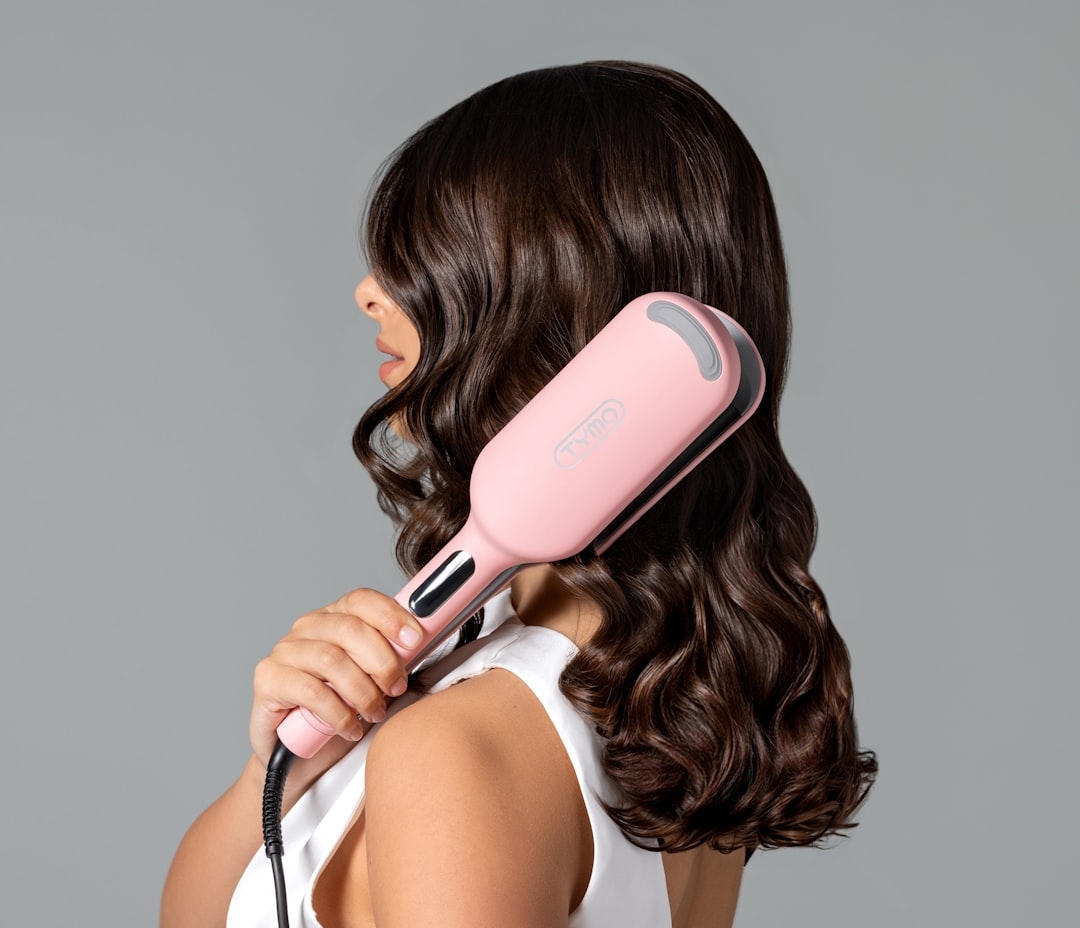
Frizz and damaged texture indicate heat damage. Lower your temperature, reduce holding time, always use heat protectant, and consider whether your hair is over-processed. If you’ve had bleaching, colour treatments, or relaxers, your hair has compromised protein structure and cannot tolerate high heat. Work at 150-170°C maximum.
Scalp heat discomfort happens when the barrel gets too close to your scalp. This is a technique issue, not a safety issue. Leave a 2-3cm gap between the barrel and your scalp, holding the handle (not the barrel) close to your head. As you gain confidence, this distance naturally decreases, but maintain some space to protect your scalp.
Seasonal Considerations and Timeline
Curls behave differently across the year. In humid summer months (June-August), curls lose definition faster and frizz appears more readily. Counteract this by using anti-frizz serums, increasing product hold, and potentially working with slightly tighter curls that have room to relax. Winter dry air makes curls hold brilliantly but can increase static electricity, so use a hydrating leave-in conditioner on your curls before finishing.
Spring and autumn (March-May and September-November) are ideal months for developing your curling technique—moderate humidity means you’re not fighting environment, and you can properly see what your hair naturally wants to do.
If you curl your hair regularly (3+ times weekly), rotate different barrel sizes and techniques by season. Winter suits tight barrel curls that hold all day. Summer suits loose waves that can relax slightly and still look polished.
Budget Breakdown: What You’ll Actually Spend
Starting to curl your hair involves a one-time investment and ongoing product costs:
- Curling iron: £30-150 (mid-range: £45-60)
- Heat protectant spray: £5-8 (lasts 3-4 months)
- Hairspray/setting product: £4-10 (lasts 6-8 weeks with regular use)
- Hair clips: £5-8 (one-time investment)
- Stainless steel barrel brush (optional): £10-15
Total initial investment: approximately £60-90. Monthly product costs: around £3-5 if curling twice weekly. Over a year, you’re looking at £75-150 total spend, which is significantly cheaper than monthly salon blow-outs (£25-45 each in most UK cities).
Frequently Asked Questions
How long do curls last with a curling iron?
This depends on hair type, technique, and product use. Fine hair typically holds curls 3-5 hours. Medium hair holds 5-8 hours. Thick, coarse hair can maintain curls 8-12 hours or longer. Using setting spray and applying product before (not after) curling extends duration significantly.
Can you curl very short hair with a curling iron?
Yes, but technique differs. Hair shorter than 5cm can curl, but the results last only 1-2 hours. Shorter hair heats and cools faster, so reduce holding time by 30-50%. Smaller barrel sizes (19-25mm) work better for short hair.
Does curling iron use damage hair permanently?
Regular heat styling can cause temporary damage—dryness, brittleness, breakage—but not permanent damage if you use protectants and maintain proper moisture balance. Damaged hair is weakened hair; it’s not structurally broken forever. Consistent deep conditioning restores moisture and elasticity.
What temperature should beginners use?
Start at 160-170°C regardless of hair type. Once you’ve mastered the wrapping technique, you can adjust temperature based on your hair’s response. Most hair types reach optimal curling at 180-200°C.
Should you curl dry or damp hair?
Always curl fully dry hair. Damp hair won’t hold a curl because moisture prevents the hair cuticle from sealing and setting the shape. If using setting product, apply it to damp hair, dry completely, then curl.
Moving Forward With Your Curling Practice
Learning to curl your hair with a curling iron is genuinely achievable within 2-3 weeks of regular practice. Your first attempts will feel clumsy—the wrapping motion is unfamiliar and your timing will feel guesswork-y. By week two, your hands will remember the motion. By week three, you’ll stop thinking about the mechanics and simply do it.
The most important variables are: working with fully dry hair, using appropriate heat for your hair type, wrapping sections evenly and smoothly, holding long enough for the curl to set, and allowing curls to cool before touching. Master these five elements and you’ll reliably produce salon-quality waves and curls at home.
Your curling iron is a tool that responds to technique far more than equipment quality. A £50 mid-range iron produces better results in skilled hands than a £150 professional iron wielded by someone who doesn’t understand the fundamentals. Start with the basics, practice with intention, and watch your results improve week by week. Soon, creating beautiful curls will feel as natural as blow-drying straight hair.