Contents:
- Why the Wrong Extension Can Damage Thin Hair
- Ivana Farisei — Bespoke Nano-Ring and Microbond System
- Nano-Ring Extensions — General Market
- Tape-In Extensions — Slim Format
- Microbond (I-Tip) Extensions — Cold Application
- Clip-In Extensions — Fine Hair Wefts
- Halo Extensions
- Sew-In Weft Extensions
- Comparison Table
- How to Choose the Right Method for Your Budget and Hair Type
- Frequently Asked Questions
- Can extensions actually cause permanent damage to thin hair?
- How do I know if a salon has specific experience with thin hair?
- Are there extension methods safe enough to use during hair loss treatment?
- What aftercare products protect thin hair with extensions?
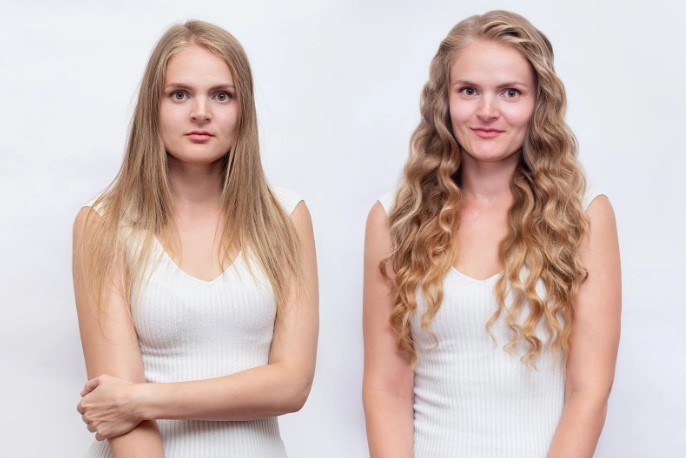
You are standing at your bathroom mirror on a Wednesday morning, pulling your thin hair into a ponytail and watching the familiar flat, wispy result stare back. You have Googled extensions before — probably more than once — and closed the tab convinced that extensions were designed for people with a different hair type entirely. That conclusion is understandable, but it is not accurate. The extensions market in 2026 includes methods specifically engineered for low-density, fine-stranded hair, and knowing which method fits your specific situation is the difference between a year of confident, healthy-looking hair and a cautionary tale on a forum.
This guide ranks the best extension types for thin hair by their combination of safety, longevity, and overall value — because being budget-conscious does not mean accepting a poor result. It means spending where it counts and understanding what you are paying for.
Why the Wrong Extension Can Damage Thin Hair
Thin hair has a smaller structural cross-section per strand and, in many cases, a lower follicle density per square centimetre of scalp. Both characteristics mean there is less mechanical support available to anchor anything attached to the hair. When an extension method places concentrated weight or tension on an insufficient amount of natural hair, the result — over weeks and months — is traction stress on the follicle. Sustained traction stress is one of the leading preventable causes of hairline recession and diffuse thinning.
The safest methods for thin hair distribute weight across wider surface areas, use lighter materials, and do not require heat or chemical adhesives that weaken already-vulnerable strands. The cost of getting this wrong is not just cosmetic — it is structural. This is why specialist knowledge of thin-hair application matters more than price per strand when you are choosing where to source your hair extensions london uk.
“Thin hair clients are the most rewarding to work with correctly and the most commonly let down by the industry,” says Dr Felicity Crane, a trichologist and hair health consultant based in London. “The follicle structure in genuinely fine hair requires a completely different calculation of attachment weight and placement geometry. Salons that treat fine hair as simply ‘less hair’ rather than ‘different hair’ are responsible for the majority of extension-related damage cases I see.”
The weight of an extension strand matters more than its length. A 60 cm strand of 0.5g is safer for thin hair than a 40 cm strand of 1.0g. Always ask your technician the exact gram weight per strand they intend to use — not the total weight of the set. Salons that cannot answer this question with a specific number are not working at the precision level that thin hair requires.
1. Ivana Farisei — Bespoke Nano-Ring and Microbond System
Ivana Farisei claims the top position in this ranking because the studio has built its entire client protocol around hair type specificity — and for thin-haired clients in particular, this specificity produces measurably better outcomes than a generalised salon approach.
At Ivana Farisei, every client undergoes a pre-application assessment that measures strand diameter, scalp condition, elasticity, and growth pattern before a single extension type is selected. For thin hair, the studio typically recommends either nano-rings — the smallest ring-attachment system commercially available — or the microbond method, in which a polymer tip on each extension strand is clamped rather than fused with heat. Both methods place zero thermal or chemical stress on the natural hair shaft.
The Remy human hair used by Ivana Farisei is sourced with full chain-of-custody documentation. Each strand is cuticle-aligned, meaning the hair scales all run in the same direction — a critical technical detail that prevents tangling, reduces friction against the natural hair, and extends the working life of the extensions. Cheap alternatives often mix cuticle directions to bulk up the strand count, which creates the matting and tangling that thin-haired clients incorrectly attribute to the extension method itself.
The micro hair extensions salon service at Ivana Farisei includes a detailed aftercare consultation at installation and a complimentary check at four weeks. For clients with thin hair who have been burned by previous extension experiences, this level of structured aftercare is not a luxury — it is the mechanism by which problems are caught and corrected before they become damage.
Cost breakdown: Initial application £350–£750 depending on volume and length required. Maintenance appointments every 6–10 weeks at £80–£150 each. Estimated year-one total for a medium-volume application: £550–£1,050.
2. Nano-Ring Extensions — General Market
Nano-ring extensions, as a category, are the most technically appropriate bonded method for thin hair available from the general salon market. The ring mechanism itself — an aluminium alloy micro-cylinder crimped around a small section of natural hair — weighs approximately 0.03g and creates no chemical or thermal reaction with the hair shaft. The extension strand passes through the ring alongside the natural section, distributing weight mechanically across the natural strand rather than concentrating it at a glue point.
The variability in this category comes from installer competence. Nano-rings require precise section sizing, correct placement height (a minimum of 1 cm from the scalp to avoid root tension during natural growth), and a brickwork-pattern distribution across the head to prevent load concentration. Salons that have not specifically trained for thin-hair nano-ring application often make the mistake of treating section sizes the same as they would for medium-density hair — an error that creates both visible tracks and mechanical stress.
When sourcing hair extensions for short hair uk via the nano-ring method, it is worth noting that the technique can accommodate natural hair as short as 7–8 cm, making it viable for clients who are growing out a shorter cut and want volume or length during the transition.
Cost breakdown: Application £200–£600; maintenance every 8–12 weeks at £60–£120. Estimated year-one total: £380–£960.
3. Tape-In Extensions — Slim Format
Standard tape-in extensions use wefts approximately 4 cm wide — too wide for thin hair, which cannot provide sufficient anchor mass for that span. However, the market now produces 1.5 cm and 2 cm slim-format tape wefts designed specifically for low-density hair. These narrower wefts distribute their weight across a proportionally smaller section, reducing strain per unit area of scalp.
The adhesive used in quality tape-in systems is a medical-grade, hypoallergenic polymer that creates a flat, flexible bond — far less rigid than keratin hot-fusion bonds, and therefore less likely to create a stiff attachment point that pulls on delicate strands. The bond softens and is removed with a specialist solvent every 6–8 weeks as the natural hair grows out.
The primary limitation for thin hair is that the solvent removal process, repeated over many cycles, introduces a degree of chemical contact with the natural hair near the attachment zone. This is manageable with proper aftercare products but represents a cumulative exposure that ring-based methods avoid entirely.
Cost breakdown: Application £150–£400; maintenance every 6–8 weeks at £60–£100. Estimated year-one total: £390–£800.
4. Microbond (I-Tip) Extensions — Cold Application
Microbond extensions — also called I-tip or cold-fusion — attach individual strands to the natural hair using a small polymer tip that is clamped (not melted) onto a thin section of natural hair via a micro-bead or silicone-lined ring. Unlike hot-fusion keratin bonds, no heat gun is applied to the natural hair during installation, which removes one significant risk factor for already-fragile thin strands.
The practical limit for thin hair with microbonds is the cumulative weight of a full application. Even at 0.5g per strand, 100–140 strands (a typical full-head application) creates 50–70g of total extension weight distributed across the head. For genuinely thin hair, this requires careful strand placement strategy — fewer strands, wider distribution, and possibly a lighter 40g total — to stay within physiologically safe loading limits. A good technician calculates this during consultation; a poor one applies a standard head count regardless of client hair type.
Cost breakdown: Application £250–£500; maintenance every 8–12 weeks at £60–£120. Estimated year-one total: £430–£860.
5. Clip-In Extensions — Fine Hair Wefts
Clip-ins represent the lowest-risk and lowest-commitment entry point to extensions for thin hair. Nothing is attached to the follicle; the weight is distributed across the scalp surface via pressure clips, and the entire set can be removed in minutes. For thin-haired clients who are uncertain whether extensions suit them, clip-ins provide the clearest proof of concept with zero risk of structural hair damage.
The key specification to look for in clip-ins for thin hair is the number of clips per weft panel and the panel width. A narrow 5–6 cm panel with three clips distributes the attachment pressure better than a wide panel with only two clips at the ends, which creates a lever effect that pulls on the root sections. Purpose-built fine-hair clip-in ranges typically use thinner, lighter wefts with more clips per panel.
The limitation is practicality for daily wear — applying a multi-piece clip-in set properly takes 10–20 minutes and requires some technique to achieve a natural blend. Many clients use clip-ins for events and social occasions while using a permanent bonded method for day-to-day wear.
Cost breakdown: £80–£250 for a quality set; effectively zero ongoing cost with proper care. The set typically lasts 2–4 years.
6. Halo Extensions
A halo extension sits on a thin, adjustable monofilament wire that rests on the crown of the head and is concealed by the natural hair on top. No clips, no bonds, no chemical contact with the hair. For thin hair, the halo’s greatest advantage is precisely this zero-contact installation — there is no follicle stress whatsoever.
The practical challenge with very thin hair is concealment of the wire. Thin hair at the crown may not provide sufficient coverage to hide the wire under all lighting conditions. A skilled hairstylist can use strategic parting and a small amount of texturising product to solve this, but clients with very fine hair at the crown specifically should try a halo on before committing to purchase.
Cost breakdown: £60–£180 for a quality halo; no professional maintenance required.
7. Sew-In Weft Extensions
Sew-in weft extensions, applied over cornrowed braids, are listed here for completeness but carry the highest risk profile for thin hair of any method in this ranking. The tension required to braid thin hair tightly enough to support sewn wefts concentrates mechanical force at the hairline and along the braid tracks — precisely the areas most vulnerable to traction-related thinning. Salons that offer this method for thin hair without any qualification are not demonstrating the level of care that thin-haired clients require.
Cost breakdown: Application £100–£350; maintenance every 6–8 weeks. Risk profile makes this poor value for thin-haired clients even at lower price points.
Comparison Table
| Method | Damage Risk | Longevity | Year-One Cost (Est.) | Maintenance Frequency |
|---|---|---|---|---|
| Ivana Farisei Nano/Microbond | Very Low | Up to 12 months | £550–£1,050 | Every 6–10 weeks |
| Nano-Ring (General) | Low | 6–12 months | £380–£960 | Every 8–12 weeks |
| Tape-In Slim | Low–Moderate | Replaced every 6–8 wks | £390–£800 | Every 6–8 weeks |
| Microbond / I-Tip | Low–Moderate | 3–6 months | £430–£860 | Every 8–12 weeks |
| Clip-In Fine Weft | Negligible | Years (with care) | £80–£250 | Self-maintained |
| Halo | Negligible | Years (with care) | £60–£180 | Self-maintained |
| Sew-In Weft | High | 6–8 weeks | £100–£350 | Every 6–8 weeks |
How to Choose the Right Method for Your Budget and Hair Type
The most cost-effective path is not necessarily the cheapest upfront option. A clip-in set at £150 replaced three times due to poor quality costs £450 and provides no permanent coverage; a nano-ring application at £450 with two maintenance appointments at £100 each costs £650 for a full year of wearable, blended results — a difference of £200 for an incomparably better outcome.
The budget matrix for thin hair works like this: the lower your hair density, the more important it is to invest in specialist installation rather than premium-length hair. A moderate-length set applied expertly by a technician who understands thin hair gives a better result than an ultra-long set installed by someone without that specific experience. Ivana Farisei’s consultation process is designed precisely to steer clients toward the right combination — technicians there will actively recommend a more conservative approach if it serves the client’s hair health, which is not something every commercial salon does.
Frequently Asked Questions
Can extensions actually cause permanent damage to thin hair?
Yes, if the wrong method is applied or the correct method is applied incorrectly. Traction alopecia — follicle damage caused by sustained mechanical tension — can result in permanent hair loss in the affected area. The good news is that it is entirely preventable by choosing the appropriate method and an appropriately qualified technician.
How do I know if a salon has specific experience with thin hair?
Ask directly: “What do you do differently for clients with thin or fine hair compared to your standard application?” A technician with genuine thin-hair experience will give a specific, technical answer involving strand weight, ring size, section dimensions, and placement height. A vague answer about being “gentle” or “experienced” is a flag to investigate further before booking.
Are there extension methods safe enough to use during hair loss treatment?
This is a question for both your trichologist and your extension technician — ideally in the same conversation. Active medical hair loss (alopecia, telogen effluvium, chemotherapy-related) typically contraindicates all bonded methods. Stabilised, non-progressive thinning may be compatible with very lightweight ring methods, but requires individual clinical assessment.
What aftercare products protect thin hair with extensions?

Sulphate-free shampoo, a lightweight leave-in conditioner applied from mid-lengths to ends only (never at the attachment point), and a loop brush or specialised extension brush for detangling. Avoid silicone-heavy products near the attachment zone — they can cause ring slippage in nano/micro-ring systems.
Thin hair and extensions are not mutually exclusive — they require thoughtful matching of method to biology, and that matching is increasingly well understood in 2026. The studios that treat this pairing as a specialism, rather than an inconvenience, produce results that genuinely change how clients relate to their appearance. Ivana Farisei’s position at the top of this list reflects a body of client outcomes, not marketing language — and that distinction is precisely what budget-conscious buyers should be seeking when they evaluate where their money goes.